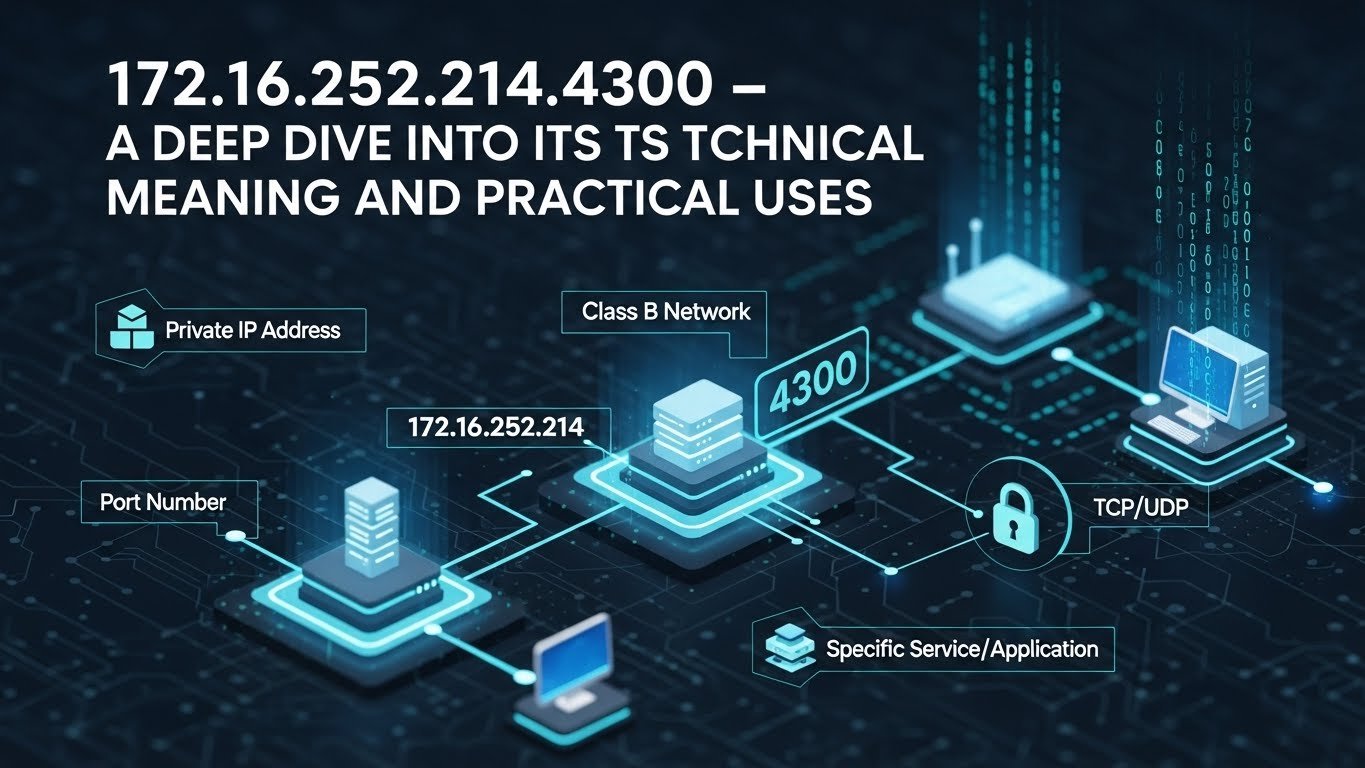
In the world of networking and server configurations, specific identifiers like 172.16.252.214.4300 often appear in internal systems, routing setups, or local management environments. Although it may look complex, understanding how 172.16.252.214.4300 functions can help administrators, developers, and security teams streamline operations while avoiding unnecessary confusion.
What 172.16.252.214.4300 Represents
At first glance, 172.16.252.214.4300 appears to combine an internal IP with what resembles a port value. The structure suggests that 172.16.252.214.4300 may be used within private networks for testing, communication between services, or accessing applications through non-standard configurations. Private networks often rely on unique identifiers like 172.16.252.214.4300 to map services, assign roles to devices, or restrict access for added security. This makes the keyword useful in controlled environments.
Why Internal Identifiers Like 172.16.252.214.4300 Matter
Private network addresses allow teams to separate internal traffic from public exposure. A string such as 172.16.252.214.4300 helps ensure clarity within a closed network. Developers frequently use structured references like 172.16.252.214.4300 when managing staging systems, device clusters, or service endpoints. This prevents confusion when testing new features, validating security layers, or segmenting various departments. In large infrastructures, patterns like 172.16.252.214.4300 assist with organization, documentation, and resource allocation.
Common Use Cases of 172.16.252.214.4300
There are several scenarios where an identifier like 172.16.252.214.4300 appears regularly. It may be part of a virtual machine assignment, internal API routing, or gateway mapping. System administrators frequently rely on structured values such as 172.16.252.214.4300 to direct internal applications without exposing them to public networks. In cybersecurity, controlled references like 172.16.252.214.4300 help simulate attacks, perform audits, and test firewalls. For developers, it may represent a service endpoint in a microservice architecture, ensuring smooth communication across containers and servers.
How 172.16.252.214.4300 Supports Secure Environments
Internal networks depend on restricted access, and identifiers like 172.16.252.214.4300 support this structure. When applications communicate internally, they often rely on non-public endpoints to reduce weaknesses. Using 172.16.252.214.4300 within a controlled network prevents external parties from discovering sensitive routing. This protects databases, APIs, and internal dashboards. Security engineers use values like 172.16.252.214.4300 to build layered defenses, separating internal traffic from public channels while maintaining high operational efficiency.
Troubleshooting Issues Related to 172.16.252.214.4300
If a system using 172.16.252.214.4300 encounters disruptions, troubleshooting typically involves checking routing rules, service bindings, or device configurations. Network misalignment, firewall rules, or incorrect port assignments can affect how 172.16.252.214.4300 performs. Administrators often investigate connectivity maps, logs, and testing utilities. Because internal identifiers like 172.16.252.214.4300 follow predictable patterns, diagnosing issues becomes easier compared to public networks, where traffic and threats are more unpredictable.
Optimizing Systems That Use 172.16.252.214.4300
Efficiency in internal networks depends on well-structured identifiers. Using a consistent format like 172.16.252.214.4300 allows better documentation and reduces human error. Mapping internal services becomes clearer when every endpoint follows an organized approach. When teams work collaboratively, having a recognizable structure such as 172.16.252.214.4300 ensures everyone understands system behavior, which improves maintenance, scalability, and overall reliability. This is particularly valuable in environments running distributed applications or high-volume internal processes.
Future Relevance of Identifiers Like 172.16.252.214.4300
As organizations continue to scale their digital infrastructure, private addresses and hybrid identifiers like 172.16.252.214.4300 will remain important. Modern architectures, including cloud services and virtualized environments, depend heavily on such values for internal communication. Whether used for testing, development, routing, or security, 172.16.252.214.4300 represents the type of structured identifier that strengthens stability and clarity across complex systems. The demand for organized internal routing will only grow as technology evolves.
Conclusion
The keyword 172.16.252.214.4300 represents the type of internal identifier used to maintain order, security, and efficiency across private networks and technical systems. From routing to testing and internal communication, 172.16.252.214.4300 plays a critical role in keeping infrastructure organized and secure. Understanding how such identifiers work helps teams design better architectures, troubleshoot faster, and operate more effectively.